February 18, 2026
Heat Pump Water Heaters and Title 24 Requirements in 2025+: A Complete California Guide
California's energy codes are accelerating the shift toward all-electric, high-efficiency homes, and heat pump water heaters (HPWHs) are now one of the most important systems for Title 24 compliance in 2025 and beyond.
If you're planning a new home, ADU, addition, or major remodel in California, understanding how Title 24 water heater requirements affect your project can save you time, money, and permit delays.
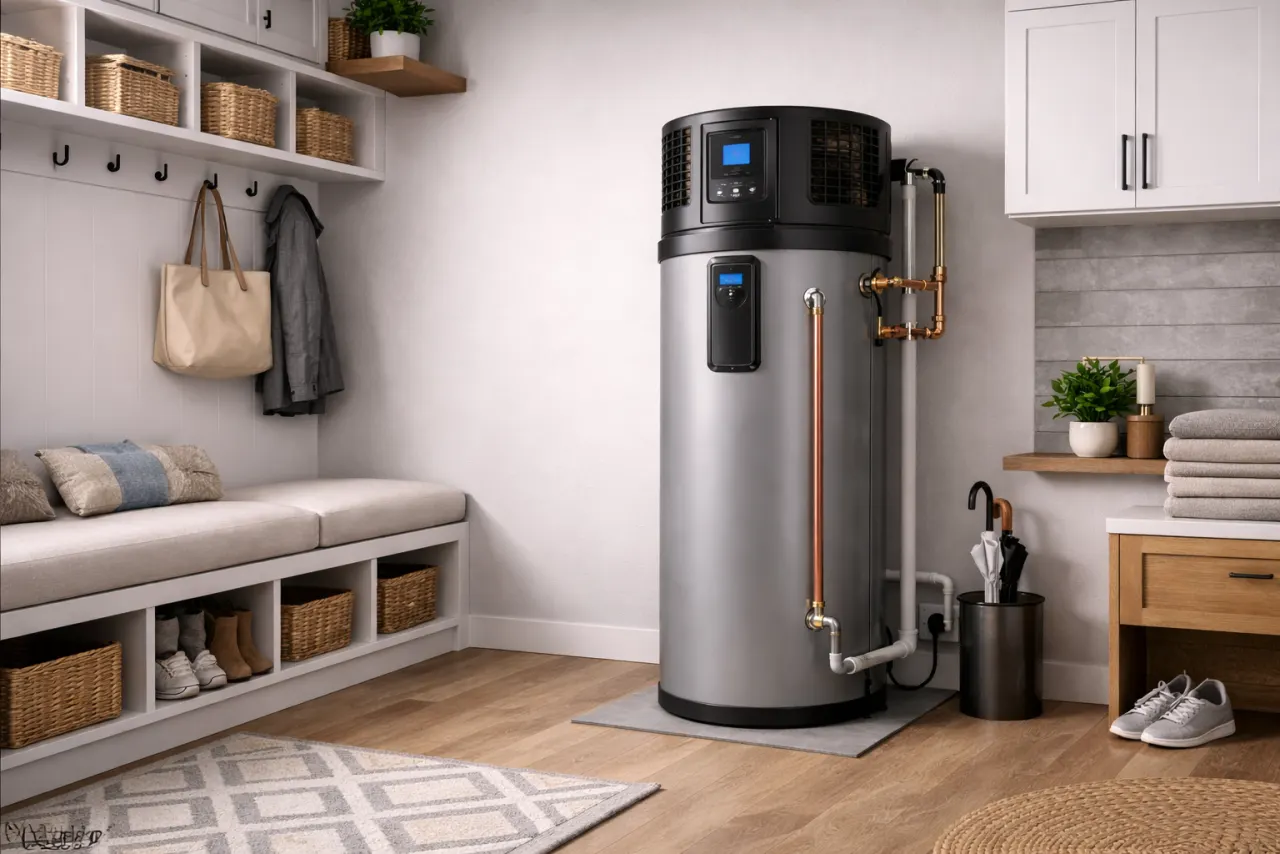
A heat pump water heater installed in a garage — one of the most common and effective placements for Title 24 compliance.
In this guide, we'll cover:
- What a heat pump water heater is
- How Title 24 is changing in 2025+
- When a heat pump water heater is required (or effectively required)
- How HPWHs impact Title 24 energy compliance
- Costs, rebates, and common mistakes to avoid
What Is a Heat Pump Water Heater?
A heat pump water heater uses electricity to move heat from the surrounding air into the water, instead of generating heat directly like gas or electric resistance water heaters.
Key benefits of heat pump water heaters:
- Up to 60–70% more energy efficient than traditional electric water heaters
- Lower operating costs over time
- Significantly lower carbon emissions
- Helps meet California Title 24 energy efficiency requirements
- Often qualifies for rebates and tax incentives
Because of these advantages, heat pump water heaters are becoming the preferred—and often necessary—choice for Title 24 compliance in California.
How Title 24 Is Changing in 2025 and Beyond
California's Title 24 Energy Code (Part 6) is updated regularly to reduce energy use and greenhouse gas emissions. The 2022 and 2025 code cycles continue a strong push toward electrification and high-efficiency systems.
For water heating, this means:
- Heat pump water heaters are strongly favored in energy models
- Gas water heaters make Title 24 compliance harder and more expensive
- All-electric homes typically perform better in compliance calculations
- Many projects now fail compliance without a heat pump water heater or major trade-offs
While Title 24 does not always explicitly say "you must install a heat pump water heater," in practice: for many new homes, ADUs, and major additions in 2025+, a heat pump water heater is the simplest and most cost-effective path to compliance.
When Is a Heat Pump Water Heater Required for Title 24?
You will likely need—or strongly benefit from—a heat pump water heater if your project is:
If you choose a gas water heater instead, you'll often need:
- More solar PV capacity
- Better insulation or windows
- Higher-efficiency HVAC systems
- Multiple rounds of energy model revisions
That usually means higher costs and longer permit timelines.
Title 24 Compliance Paths: Why Heat Pump Water Heaters Help
There are two main ways to comply with Title 24:
1. Prescriptive Compliance
You follow a fixed set of requirements. This path is simple—but increasingly restrictive for gas appliances.
2. Performance Compliance
You use energy modeling to prove your building performs as well as or better than a baseline building.
A heat pump water heater dramatically improves your Title 24 performance score.
That can mean:
- Less solar required
- More design flexibility
- Lower risk of failing plan check
- Faster approvals
Design and Installation Considerations
To meet code and inspection requirements, most projects need to plan for:
Planning early avoids:
- Costly electrical change orders
- Failed inspections
- Last-minute Title 24 redesigns
Cost, Rebates, and Incentives in 2025+
While heat pump water heaters cost more upfront, California homeowners can often reduce the net cost through:
In many Title 24 projects, using a heat pump water heater actually reduces total project cost because it avoids expensive compliance trade-offs like extra solar or premium envelope upgrades.
Common Title 24 Mistakes to Avoid
Don't do this:
- Choosing the water heater after the design is finished
- Assuming a gas water heater will "probably pass"
- Not planning electrical capacity early
- Waiting until plan check to fix compliance issues
The smart approach:
Design for Title 24 compliance from day one—and treat the heat pump water heater as a core system, not an afterthought.
The Bottom Line
- Heat pump water heaters are becoming the default solution for Title 24 compliance
- Gas water heaters increasingly create cost and permitting risk
- Choosing an HPWH early simplifies compliance, reduces risk, and future-proofs your home
For new homes, ADUs, and major additions in California, a heat pump water heater is no longer a niche upgrade—it's quickly becoming the standard.
Frequently Asked Questions
Planning an ADU or Addition?
From our ADU and addition project experience, coordinating system selection and energy modeling with the drawings helps avoid corrections. Title 24 compliance is prepared in-house as part of our permit sets; we do not accept standalone report requests.
Pass plan check faster and avoid costly redesigns.
Get Your Free Quote